What "raw" beeswax actually means
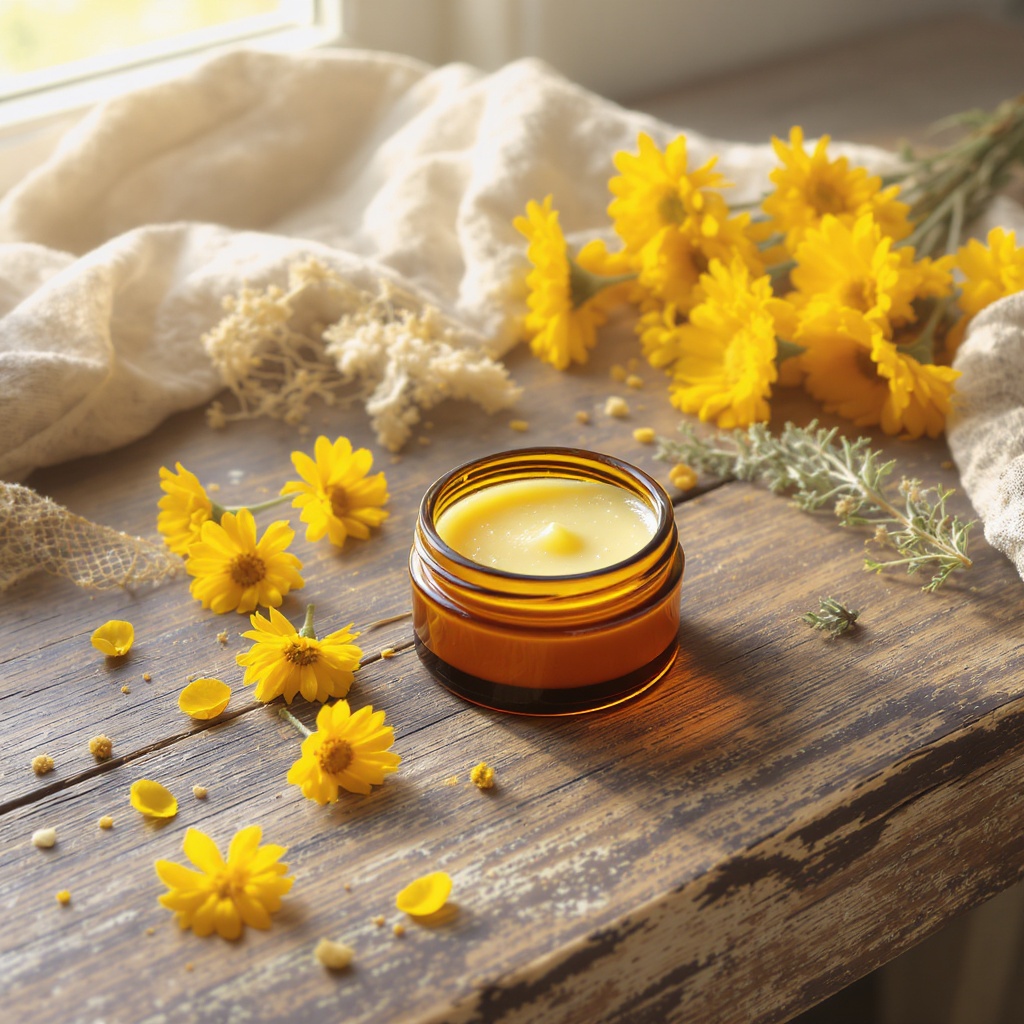
The beeswax on a small-batch skincare label is not the same thing as the beeswax on a cosmetics-ingredient database. "Raw" in this context means the wax straight off the hive frame — minimally filtered, never bleached, and carrying the trace residues of the bee's own work: small amounts of propolis, pollen lipids, and the volatile compounds the hive uses to keep itself healthy. The colour is the giveaway. Raw beeswax is the colour of honey — pale gold through deep amber, depending on the season and what the bees were foraging on. Bleached beeswax is white, and the bleaching process strips most of what makes the raw material interesting.
Commercial beeswax is bleached and filtered for visual uniformity — the same logic that drives a white-and-bright aesthetic in any mass-market cosmetic. The bleaching removes pigment and a meaningful fraction of the volatile compounds that give raw beeswax its scent and its mild antimicrobial profile. What remains after bleaching is still beeswax — still functional as a structural wax — but it's a more generic structural wax. The formulator's version of the difference between honey and refined sugar.
We render beeswax from our own hives. We pull frames in late summer, after the honey harvest, and melt them down in a slow water bath. The wax floats, the water carries away the particulate, and what's left on top is poured off into blocks. That's what goes into both products on the shelf. Nothing has been removed except the bits of frame and brood comb that didn't belong there in the first place.
Antimicrobial properties — what the literature actually shows
Raw beeswax carries a small but measurable antimicrobial character that bleached beeswax loses. The source is two-fold. First, the trace propolis — the resinous material bees collect from tree buds and use to seal the hive — is rich in flavonoids (pinocembrin, galangin, caffeic acid phenethyl ester) that have well-documented activity against Gram-positive bacteria. Second, the pollen lipids and plant waxes that ride along with raw beeswax contribute their own low-level antimicrobial residue.
The effect is subtle. This isn't tea-tree oil. The levels of propolis and accompanying flavonoids that survive into a balm or cream are small — measured in parts per thousand rather than percentages — and the contribution to product stability is real but modest. Where it matters most is on a shelf, in a lipid-phase formula that has no synthetic preservative system. A tallow-beeswax balm with no synthetic preservative relies on the antimicrobial trace chemistry of its raw ingredients to keep the lipid phase from going off in the months between manufacture and use.
The practical version: raw beeswax doesn't make a balm "self-preserving" in the regulatory sense, and we don't claim it does. What it does is shift the lipid phase of a formula in the direction of stability — enough that a clean tallow and beeswax combination can sit on a shelf for a year without a synthetic preservative carrying the whole preservative load. That contribution is part of why we insist on raw.
Skin-barrier benefits — occlusion without suffocation
Beeswax is an occlusive — it slows transepidermal water loss by sitting on the surface of the stratum corneum. That's the part most summaries cover. The part that's less often noted is the molecular reason it occludes without suffocating the barrier the way a fully hydrocarbon-based occlusive (petroleum jelly, mineral oil) does.
Beeswax is built from long-chain alkanes, monoesters, and free fatty acids — a mix that's structurally more varied than the uniform hydrocarbon chains of a mineral-oil occlusive. That variety at the molecular level translates into an occlusive film with a looser, slightly more breathable structure. Water moves out slowly. Gases — oxygen, carbon dioxide, water vapour — still exchange across the film. The barrier isn't sealed off from the air; it's just less exposed to it.
This is the structural difference that matters at the bathroom shelf. Petroleum jelly will occlude more aggressively than beeswax, but it does so by laying down a continuous hydrocarbon film that the skin cannot integrate with. Beeswax occludes less aggressively, and what it lays down is a mixed-ester film that, over the hours it's on the skin, integrates more of the way a beeswax-and-tallow combination does. The barrier underneath keeps doing what it does — exchanging gas, regulating water — at a slower pace, rather than being parked entirely.
The practical version: for everyday wear, particularly on areas where the barrier is being asked to do normal things (cheeks, hands, low points, anywhere airflow is moderate and humidity is reasonable), beeswax is the more useful occlusive. For raw winter windchill or barrier-stripping cold, the slightly higher occlusion of a denser balm formula is more apt. Either way, the underlying mechanism — a mixed-ester film rather than a continuous hydrocarbon film — is what's doing the work.
How beeswax shows up in our formulas
Two products, two role assignments for beeswax, both built around the same flake of wax from the same hive frames.
In our Edible Sun Balm, beeswax is the structural carrier — the substance that gives the balm its solidity at room temperature and holds the non-nano zinc oxide evenly distributed through the formula. The non-nano zinc is what does the sun-blocking work; without the beeswax grip, the zinc would settle and migrate with body heat, leaving an uneven filter on the skin and breaking the SPF claim. Beeswax's high melting point — around 145°F, well above skin temperature — is what keeps the balm intact through a long day outside. The "grip" people mention when they talk about this balm is the beeswax grip: it gives the formula enough body that the mineral filter stays where you put it, through sweat and wind.
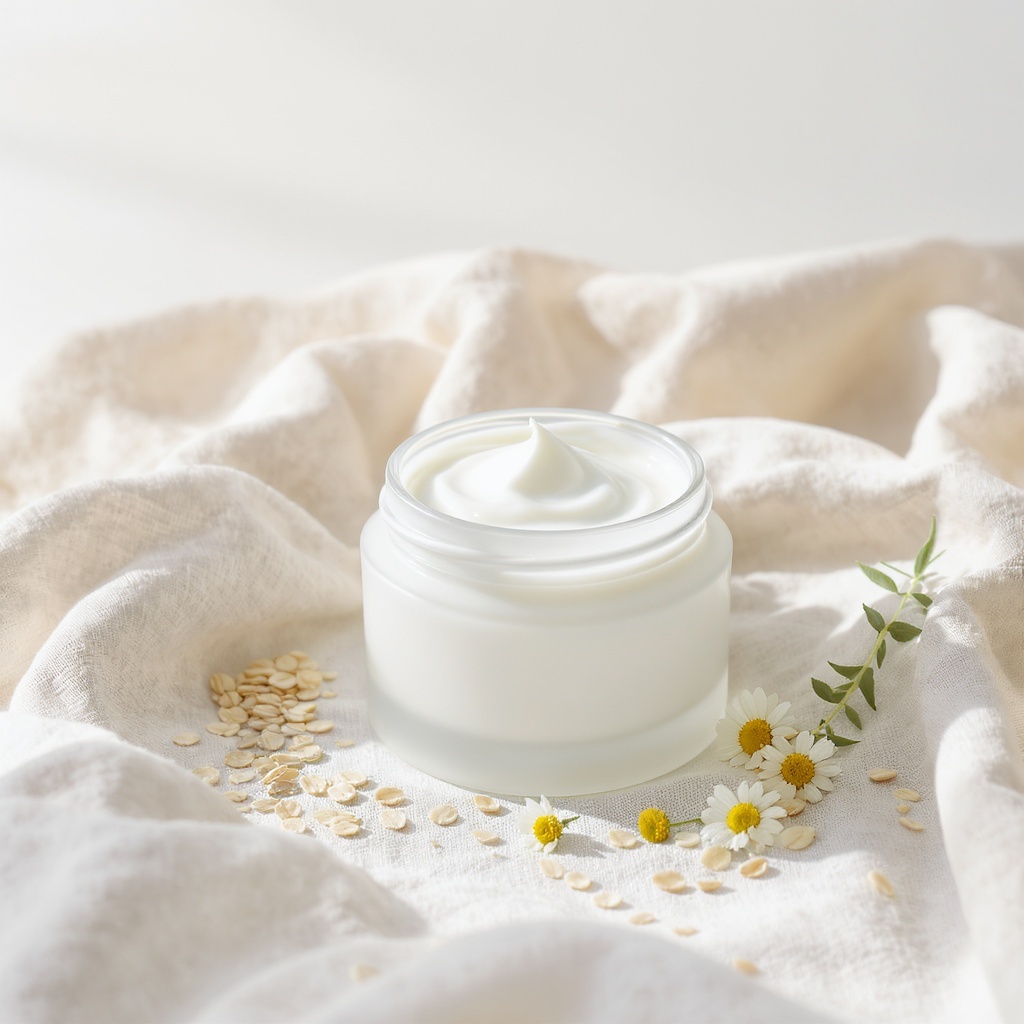
In our Moisturising Day Cream, the beeswax percentage is small and the role is different. The cream is oat-, honey-, and chamomile-forward, with grass-fed tallow as the lipid backbone, and a finishing fraction of beeswax on top of that. The beeswax here is the sealing layer — a small-percentage pass that locks the chamomile infusion and tallow into the skin without making the cream feel heavy under makeup or in humid weather. It does enough occlusion to slow water loss through the day, while leaving the cream as something that disappears into skin on contact. The percentage matters: too much beeswax and the cream tips back into balm territory; too little and the seal is incomplete. The Day Cream sits at the small-percentage end of that balance, deliberately.
If you'd like to see how this lands on your own barrier, Take the routine finder → and answer four questions. The result is built from these two products and tuned to how your skin actually behaves through a given day.