Why this comparison matters
Most of the skincare-on-the-shelf conversation lives in the cosmetic realm — texture, fragrance, packaging, a handful of marketing claims. The conversation worth having, when you actually care about what goes on your skin long-term, lives at the level of fatty-acid profiles and at how those fats behave over time.
Tallow and seed oils sit at very different points on that conversation. Both can be turned into excellent moisturizers; both can also be turned into mediocre ones. The difference isn't aesthetic. It's what the underlying fats are doing to your skin's barrier, and how stable they are while they sit on a shelf, in a jar, and then on your face.
The good news is that the deep-dive isn't very long. Three angles — fatty-acid profile, oxidation, barrier compatibility — cover most of what matters.
The fatty-acid profiles
Tallow — the rendered fat from grass-fed cattle — is dominated by saturated and monounsaturated fatty acids: palmitic, stearic, and oleic. Those are the same fatty acids that make up a large fraction of the lipids in your stratum corneum, the outermost layer of skin. The molecular shapes line up closely enough that your barrier treats tallow as something close to its own material.
Most seed oils — sunflower, safflower, soybean, grapeseed — flip the profile. They are dominated by polyunsaturated fatty acids, especially linoleic acid (an omega-6). Linoleic isn't a bad fatty acid for skin; in fact, it's crucial for the ceramide synthesis that keeps your barrier functional. But it's structurally very different from tallow's profile, and it behaves differently over time.
A moisturizer built mostly around one camp or the other turns out very different on the skin — and, as we'll get to, very different the longer it sits around.
Oxidation and how fats age
Polyunsaturated fatty acids have multiple double bonds, and every double bond is a place where oxygen can attach and the oil can degrade. The technical term is lipid peroxidation; the practical result on a shelf, in a jar, or on your skin is the same — the oil goes rancid.
Skin exposed to oxidized lipids has to deal with lipid peroxides — reactive fragments that don't belong in the barrier, that the skin has to neutralize before it can carry on with its day. Saturated and monounsaturated fats are far more shelf-stable in this respect. Tallow's profile — palmitic, stearic, oleic — has very few double bonds per molecule, so it oxidizes slowly. A well-rendered tallow balm, sealed and stored out of direct sunlight, behaves itself for years.
A seed-oil-based product with a polyunsaturated-heavy base can stay stable, but it has to lean more heavily on antioxidants, packaging choices, and preservatives to keep that conversation under control. The skin's payoff for using that kind of base day after day, with imperfect protection, is oxidative stress the barrier didn't ask for.
Why this shows up on the skin itself
Lipid peroxides aren't a hypothetical concern. They are well-documented irritants — they provoke the barrier, generate low-grade inflammation, and over time can degrade the very ceramide synthesis that linoleic acid is meant to support in the first place. A polyunsaturated oil you apply in good faith can, with time and exposure, become a quiet source of oxidative stress to the skin it was meant to help.
Barrier compatibility
Skin absorbs tallow readily because the fatty acids overlap with the barrier's own composition. The result is a moisturizer that integrates — it doesn't just sit on top, occluding; it joins the team. That integration is also why tallow's reputation has been quietly steady among people who actually formulate skincare, even as the broader wellness market has chased other things.
Seed oils can play a complementary role. Linoleic acid is, again, genuinely useful for ceramide synthesis. The right answer is rarely "tallow good, seed oils bad." The right answer is closer to: a polyunsaturated-heavy seed oil as a primary daily base, with minimal antioxidant protection, applied day after day, is where the oxidation cost starts to add up. Whole-food lipid sources with their own antioxidant packages — cold-pressed oils kept cold and dark, freshly rendered tallow from grass-fed cattle — avoid most of the problem by default.
Lessons on a shelf
The practical version of all of this is small. Two products, both built around grass-fed tallow, both designed for the moments of the day where the barrier is being asked the most.
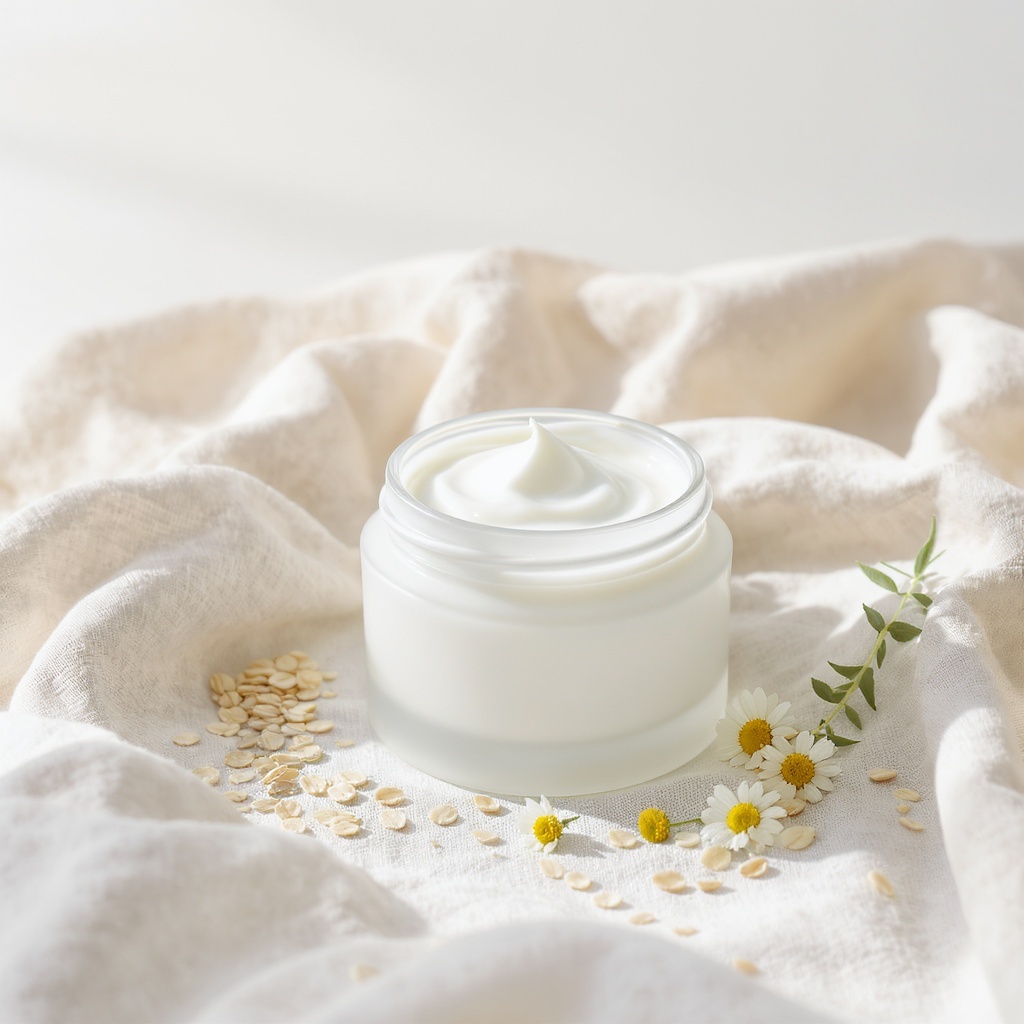
For everyday hydration — light wear under makeup, on a damp face, morning and night — the tallow-based Moisturising Day Cream is the lipid-forward daily driver. The cream is built to absorb cleanly, leave no film, and rebuild the barrier with fats the skin already knows.
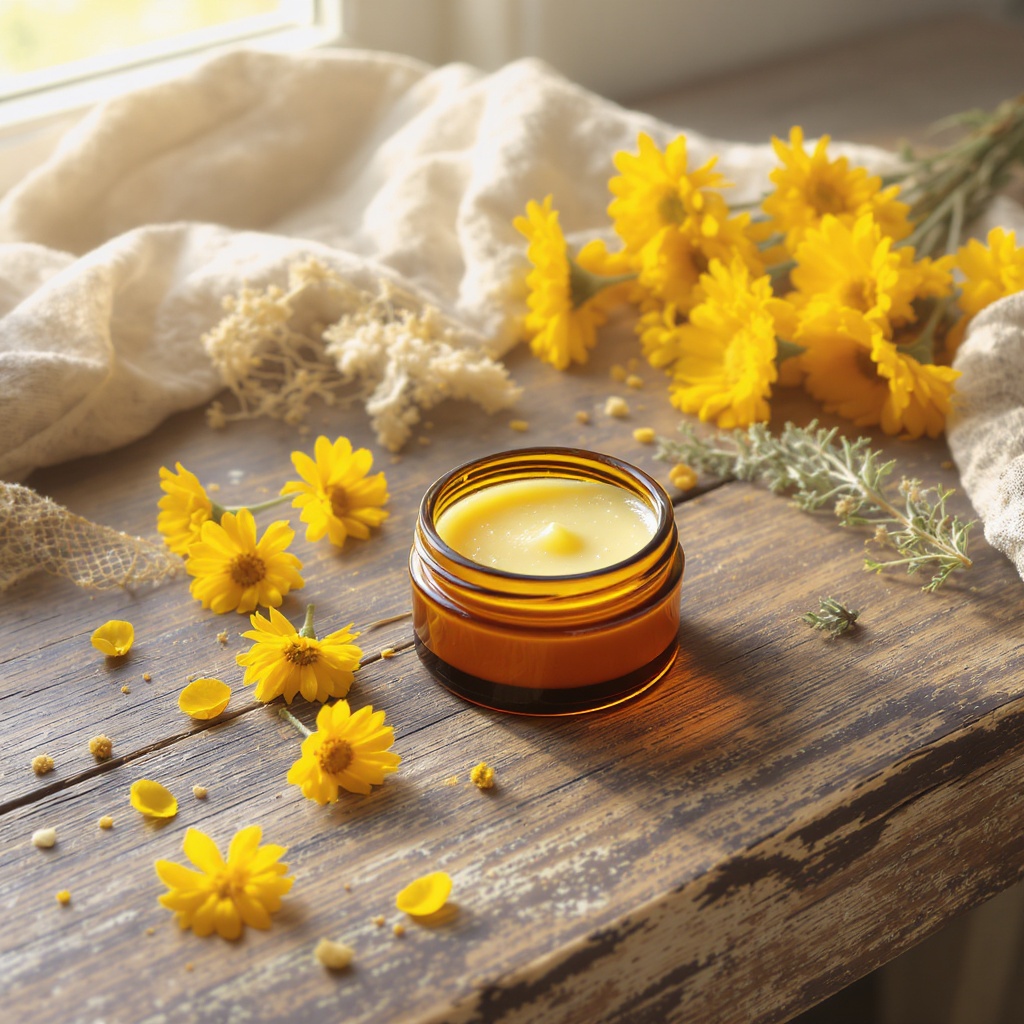
For sun and wind exposure — the moments when the barrier is being challenged from outside, and when you also want a mineral filter holding steady — the tallow-and-beeswax Edible Sun Balm takes the same lipid philosophy and adds non-nano zinc for protection.
Both products lean on the same compositional logic. Both avoid a polyunsaturated-heavy base. Both stay shelf-stable on the bathroom shelf for the simple reason that the fats they're built from don't go rancid on a calendar.
What to do with this
The takeaways are short. Saturated and monounsaturated fats are gentler on the barrier and more stable over time. Polyunsaturated oils have their place, but they cost more in oxidation terms — and the cost shows up on a shelf first, on the skin second. Where you can choose a product on the lipid logic alone, the simple fats usually win.
If you'd like a prompt to put this against your own skin, Take the routine finder → and answer four questions. The result will tune what you already have on your shelf to what your barrier actually needs.