What summer on the farm looks like — and what changes for the routine
This is the third entry in the seasonal journal we started in winter (winter) and continued in spring (spring). The premise has stayed the same each season: walk the farm, write down what's happening to the bees and the herb beds, and translate that into whatever routine adjustment the weather is actually asking for. Summer in southwest Michigan is the easiest season to write about from a "what's happening" angle, because everything is happening at once. It's also the season that has the least in common with what the routine did all winter — high humidity, long days, sun at a sharp angle — and so the season where the tallow-based routine tunes the most.
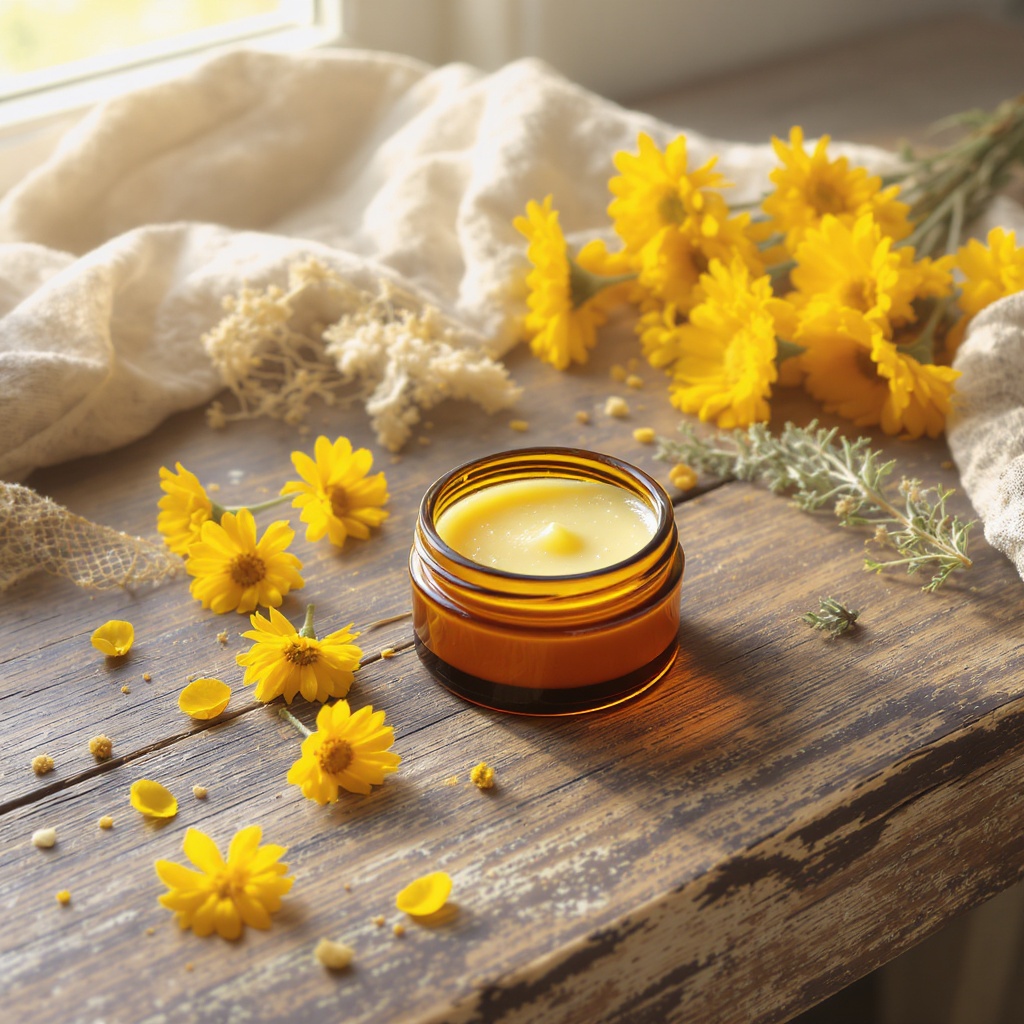
The pasture is at its peak in August. The goats have been back on full forage for months, the grass is tall and rich, and the same cattle whose suet became last winter's tallow are out grazing through the day's heat. The calendula, which overwintered under straw and came back as rosettes in April, is in full flower by July — a thick gold sprawl at the south end of the herb beds, the bees working it from before sunrise to past dusk. The hives are heavy. The pear tree is long over. The beeswax we render at the end of summer comes off the very frames the bees are working right now, and the honey we pull with it is the harvest of the same bloom cycle that produced it.
The other thing that's happening at peak pasture is exactly what we render for. Summer suet from grass-fed cattle is the highest-quality input we get all year — yellower in color, richer in beta-carotene, with the kind of lipid profile that makes the resulting tallow noticeably better on skin. We render more in summer than in any other season, and we render it slowly — low heat, several hours, strained through fine cloth — exactly the same protocol we use in winter, just with the kitchen window open.
The summer tallow routine
Three steps, the same Day Cream and the same Sun Balm, but tuned for high humidity, longer days, and the kind of barrier-friendly weather that asks for less rather than more.
Step 1 — Same cleanse, cooler water
Whatever you already wash with still works. The small change for summer is the rinse temperature — a cool splash at the end of every wash, not a long hot one. The barrier benefits from being left with as much of its own moisture intact as possible when humidity is already doing the work of hydrating the air around it. A hot shower after a day in the field still feels earned, but the face does best with a cooler finish — and the cream that goes on next absorbs more cleanly onto a barrier that hasn't just been stripped.
Step 2 — Less Day Cream than you used in spring
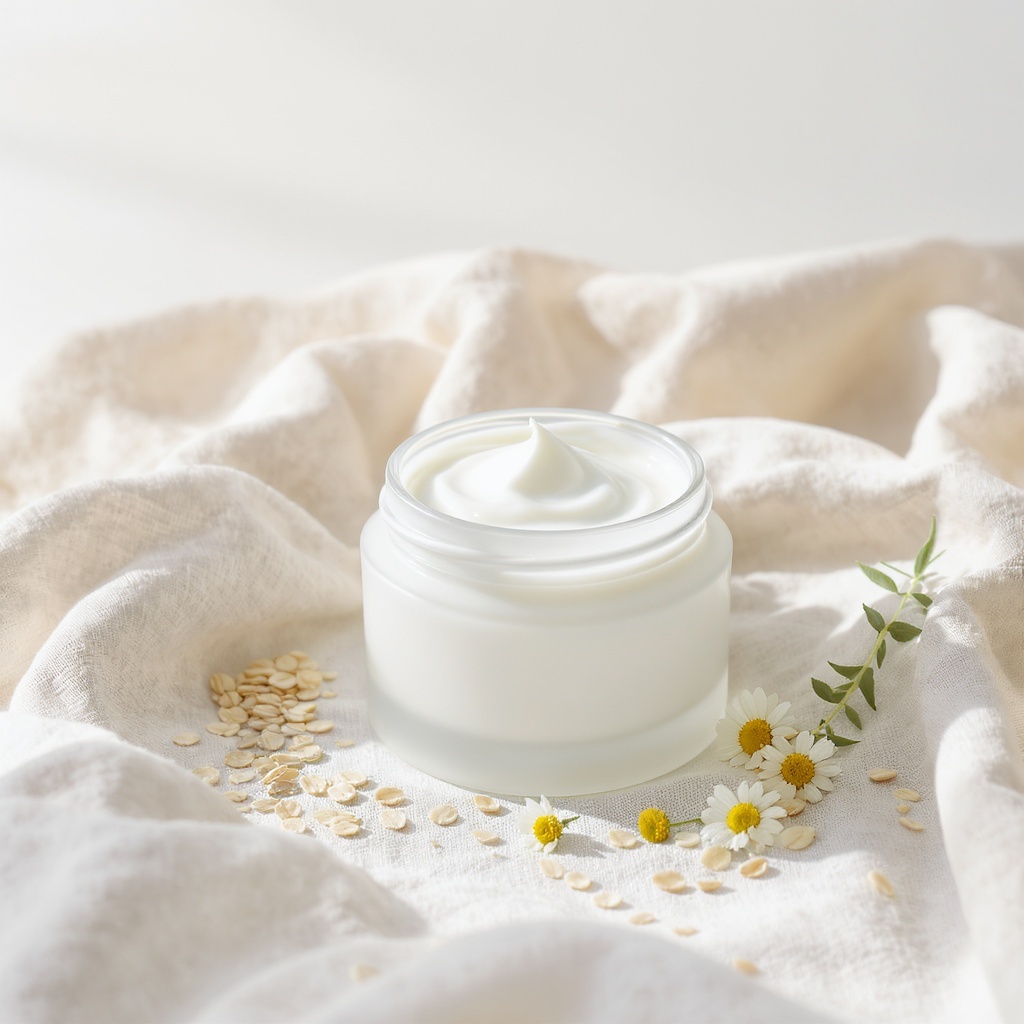
Press in a quarter-pea-sized amount of Moisturising Day Cream on damp skin. The cream is oat-, honey-, and chamomile-forward, with grass-fed tallow as the lipid backbone; a quarter-pea gives you a complete barrier-friendly base for the day when the humidity is already doing part of the work. If your cheeks feel tight after a hot afternoon, leave a slightly thicker pass there and a thinner one across the T-zone. The cream absorbs in seconds either way; the difference is whether it sits as a quiet protective base or as something you can still feel by late afternoon.
Step 3 — Sun Balm, every morning, no exceptions
This is the step that genuinely moves with the season. In winter the Sun Balm was a spot treatment on wind-burned patches. In spring it earned its place every morning. In summer it's the step you don't skip — because the sun is at its sharpest, the days are longest, and any hour outside asks the barrier to deal with the uncomfortable combination of UV and sweat at the same time. Warm a fingertip against the tin, press a thin layer of Edible Sun Balm onto the high points — cheekbones, nose, brow, ears, the tops of shoulders — fifteen minutes before you go out. The non-nano zinc does the sun-blocking work; the beeswax grip is what holds it on through humidity and the kind of sweat you don't notice until you've been outside for an hour. Reapply every two hours if you'll stay out.
Why we render tallow in the summer heat
The slow rendering protocol we use is the same in every season — around 180°F, for several hours, strained through fine cloth. The temperature is below the point where most heat-sensitive constituents break down. The vitamin A precursors hold up. The lipid structure stays intact. What changes between seasons is the suet.
Summer suet is grass-fed finishing at its peak — the cattle have been on fresh pasture for months, the fat is yellower, and the beta-carotene content is at its highest. That's the input that ends up in every batch of tallow we render for the rest of the year. The balm in a January tin on a windowsill was made from suet that came off an animal in the middle of an August pasture, even though the jar you're holding was rendered in November. The connection is the same recipe, the same protocol, and the same kind of slowly-rendered fat — the same starting point that we can stand behind, on a shelf, in the middle of a Michigan winter.
Rendering in summer heat is also when the beeswax gets pulled, in the same kitchen, from frames the bees are still working. The wax that goes into both the Day Cream and the Sun Balm is a byproduct of the late-summer harvest — the same honey-coloured blocks we render along with the tallow, the same trace residues of the hive's work.
What the bees are doing right now
The honeybees at the south end of the pasture are in full foraging mode from before sunrise to past dusk. The calendula at the herb beds is the dominant forage for August — though the goldenrod will take over by mid-September, and the aster by the first week of October. The honey we pull at the end of summer is largely from this bloom cycle. The beeswax we render is a byproduct of the same harvest. And the tallow we render in the same kitchen window is fat that came off an animal in the same pasture the bees are working.
This is the season where the whole point of "farm-fresh skincare" is most visible. The farm is at its busiest, the inputs are at their richest, and the products on the shelf are coming out of the same calendar of work that you're watching. The hive frames, the suet, the late-summer calendula — all of it goes into the same two products on the bathroom shelf.
What comes next
This is the third entry in the seasonal journal — winter covered the cold months, spring covered the thaw, and this summer entry covers the season the routine tunes the most. The fall entry will pick up from here: what the bees are doing in the aster bloom, what the goats are doing as the days shorten, and which parts of the routine shift when humidity drops and the air off the lake goes dry. The principle stays the same through every season: the same two products, the same three steps, the weights tuned to whatever the weather is doing to your barrier on a given week.
If you'd like a more personal starting point than a routine written for everyone, Find your seasonal routine → and answer four questions. It takes about a minute, and the result is built from those same two products plus a recommendation on how heavy to go in this particular season. And if you'd like a guided walkthrough of the routine from the first Day Cream pass through the final Sun Balm, the Starter guide → lays the whole thing out in one page.