The fat your skin already recognizes
Your skin's barrier — the stratum corneum — is built from a mix of ceramides, cholesterol, and fatty acids. Tallow happens to be rich in the same fatty acids: palmitic, stearic, oleic. The molecular shapes overlap enough that skin doesn't treat tallow as foreign. It absorbs it, uses it, and rebuilds with it.
This is the core of why tallow has had a quiet resurgence in recent years. Compare that to a mineral-oil-based moisturizer, which sits on top of the barrier doing useful work but never really joining the team. Tallow is closer to a teammate.
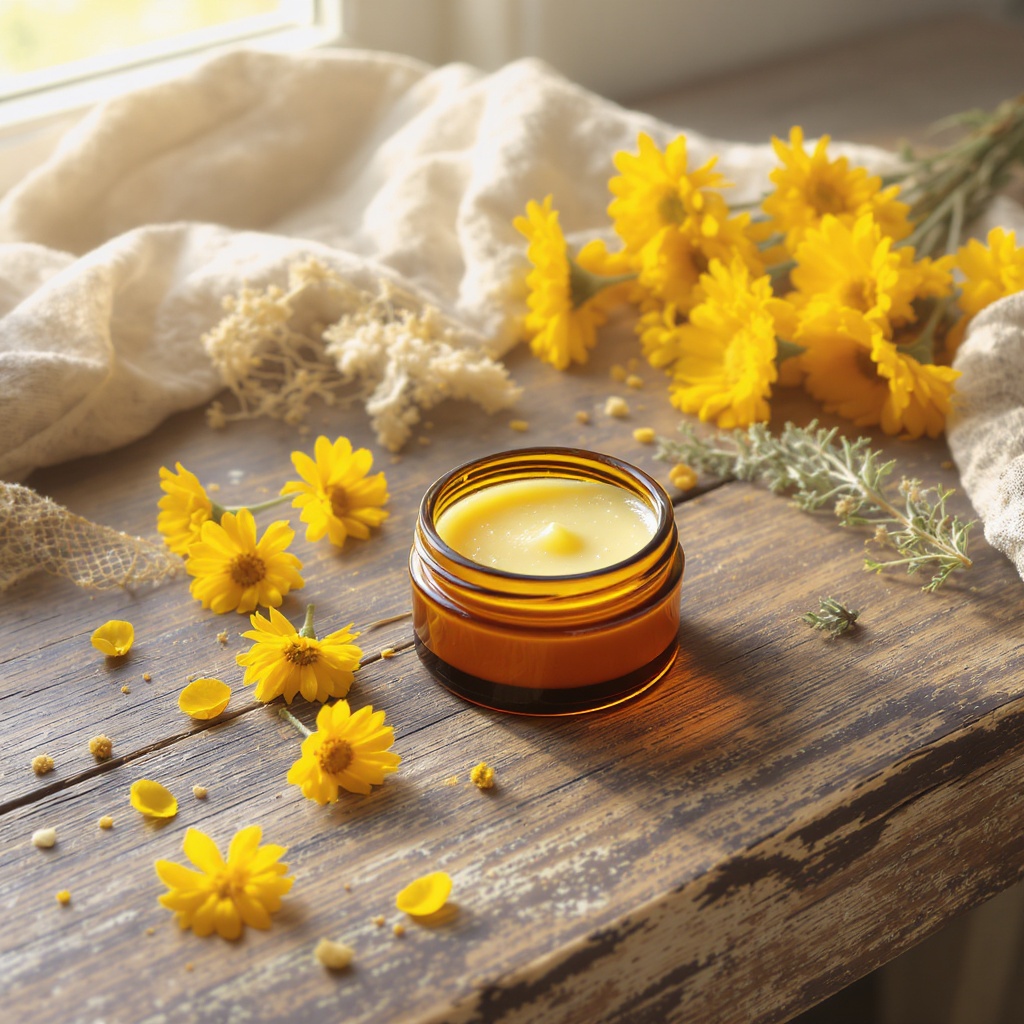
An SPF product that contains tallow in the balm still needs an actual mineral filter to do the sun-blocking job — but it doesn't fight your barrier while it does it. Our Shop the Sun Balm → uses non-nano zinc oxide for protection, with tallow and beeswax as the carrier that holds it on skin without drying you out.
Vitamins that ride along in the fat
Fat-soluble vitamins — A, D, E, and K — concentrate in animal fat. When you render tallow carefully from grass-fed suet, those vitamins come with it. Vitamin A supports cell turnover. Vitamin E is a lipid-phase antioxidant that slows the oxidation of the oils on your skin. Vitamin K plays a role in the bruising-and-redness conversation that dermatologists have known about for decades.
This is also why tallow's reputation has been quietly steady among people who actually formulate skincare, even when the broader wellness market chased the next thing. The case is straightforward: a fat your skin recognizes, with vitamins already riding in it, applied in a form your barrier accepts.
Why we render it on the farm
We render suet low and slow — around 180°F, for several hours — then strain it through fine cloth. The result is a clean, pale tallow with no smell of beef, just a faint waxy note that gets covered by the beeswax and botanicals in our formulas.
Rendering on the farm means we choose what goes in. We pick which animal, what it ate, how it was raised. Most commercial tallow is a byproduct of the meat industry — usable, but harder to trace. Ours comes from cattle we know, on pasture we walk. There's a difference in the final product. You can smell it.
The same fat, in two very different products
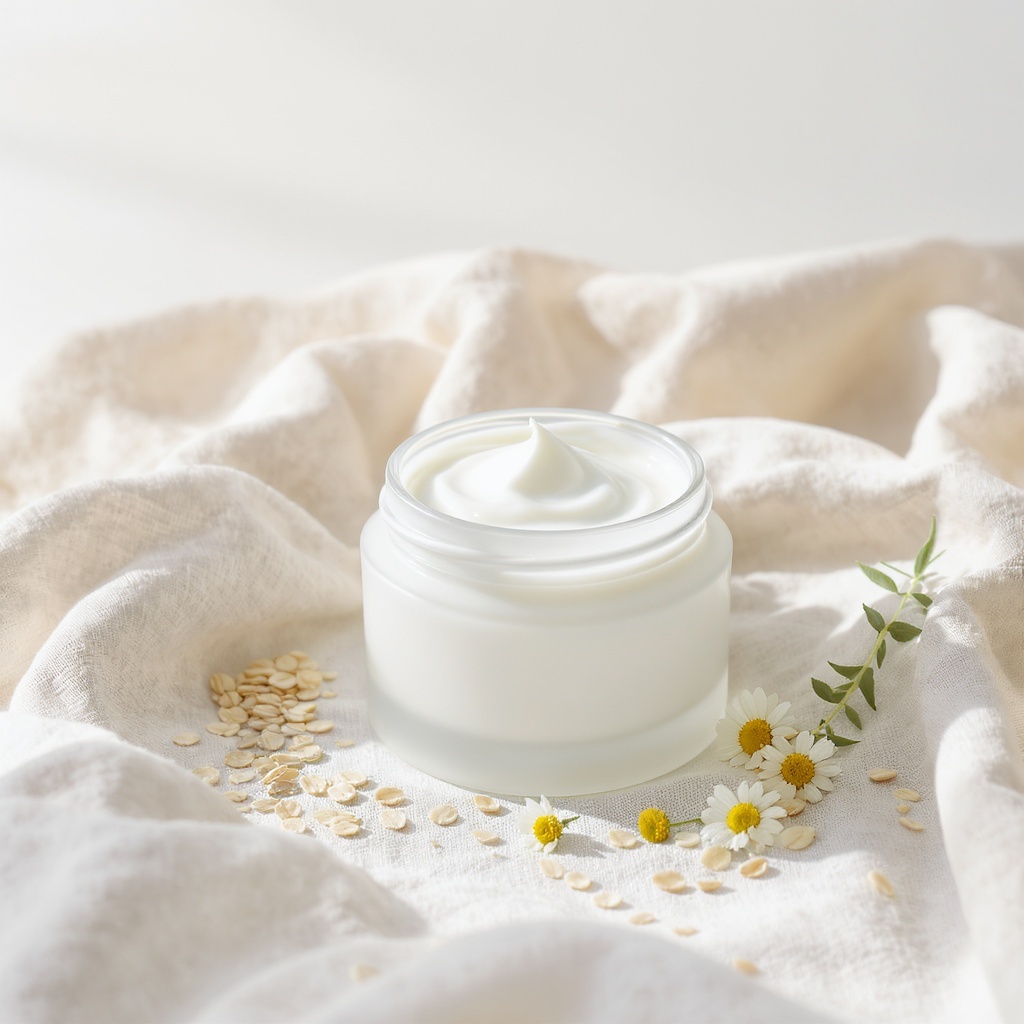
A balm and a face cream are not the same formula. A balm is mostly tallow and beeswax — protective, occlusive, designed to stay on. A cream is tallow cut with lighter oils and water-based ingredients (in our case, a chamomile infusion and colloidal oats) so it absorbs faster and wears under makeup.
If you're after everyday hydration that disappears into skin, our Shop the Day Cream → is the tallow-based daily driver. If you want a barrier layer that holds SPF on, the Sun Balm does that job. Both are built around the same grass-fed tallow. Just tuned for different moments of the day.
Sourcing and the grass-fed question
Grass-fed matters for tallow in the same way it matters for butter. Cattle that eat grass have a higher omega-3 to omega-6 ratio in their fat, and a meaningfully different vitamin profile — particularly more vitamin A precursor in the form of beta-carotene that colours the fat yellow. Grain-finished cattle produce whiter, softer fat with a less useful vitamin story.
We source from a neighboring farm that finishes on pasture. It costs more than commodity suet. We pay it. The product is better, and we can stand behind what went into the jar.